Sunlab · University of Illinois Urbana-Champaign
AI for healthcare and clinical trials
Led by Prof. Jimeng Sun, we build AI methods, open-source tools and real-world systems that help clinicians care for patients and help researchers bring new treatments to patients faster.
 Therapeutics Data Commons · NeurIPS Datasets and Benchmarks 2021
 A foundation model for human-AI collaboration in medical literature mining · Nature Communications 2025
 Matching patients to clinical trials with large language models · Nature Communications 2024
 Accelerating clinical evidence synthesis with large language models · npj Digital Medicine 2025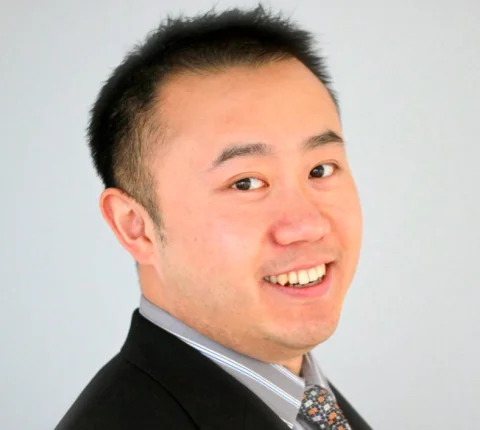
Jimeng Sun
Health Innovation Professor, University of Illinois Urbana-Champaign
Jimeng Sun is a Health Innovation Professor at the Siebel School of Computing and Data Science and the Carle Illinois College of Medicine. His research focuses on AI for healthcare, with an emphasis on clinical research, clinical trials, biomedical data science and AI-enabled drug development.
He has collaborated with organizations including IQVIA, Medidata, GE Healthcare, Massachusetts General Hospital, Beth Israel Deaconess Medical Center, Northwestern, Vanderbilt and OSF HealthCare, and is a co-founder of Keiji AI. He has been recognized as one of the Top 100 AI Leaders in Drug Discovery and Advanced Healthcare. He received his B.S. and M.Phil. in Computer Science from the Hong Kong University of Science and Technology and his Ph.D. from Carnegie Mellon University.
What we work on
Two connected research areas, each built on published, peer-reviewed work and open-source code.
AI for Healthcare
We build trustworthy AI that learns from health records, biosignals, molecules and medical literature to support clinicians, patients and scientists.
AI for Clinical Trials
We build AI that helps design better trials, find the right patients, and turn published evidence into decisions faster.
PyHealth
Our open-source Python toolkit for clinical deep learning, unifying datasets, tasks and models across health records, biosignals and imaging. Used in our course and by researchers building healthcare AI.
$ pip install pyhealth
from pyhealth.datasets import MIMIC3Dataset
from pyhealth.tasks import ReadmissionPredictionMIMIC3
from pyhealth.models import Transformer
from pyhealth.trainer import Trainer

samples = MIMIC3Dataset(root=..., tables=[...]) \
    .set_task(ReadmissionPredictionMIMIC3())
model = Transformer(dataset=samples)
Trainer(model=model).train(train_loader, val_loader)
News
- PaperTrialPanorama published in npj Digital Medicine
A database of 1.6M clinical trial records and a benchmark for training and evaluating LLMs on trial review and design tasks.
- PaperDeepEvidence published in Nature Machine Intelligence
A multi-agent deep research system that explores biomedical knowledge bases and records its findings in a traceable evidence graph.
- SoftwarePyHealth 2.0 released
A major release of our open-source toolkit for healthcare AI.
- PaperLEADS published in Nature Communications
A foundation model for medical literature mining that helped experts screen studies and extract data faster in a user study.
- PaperTrialMind published in npj Digital Medicine
An LLM pipeline that accelerates clinical evidence synthesis, from literature search to data extraction.
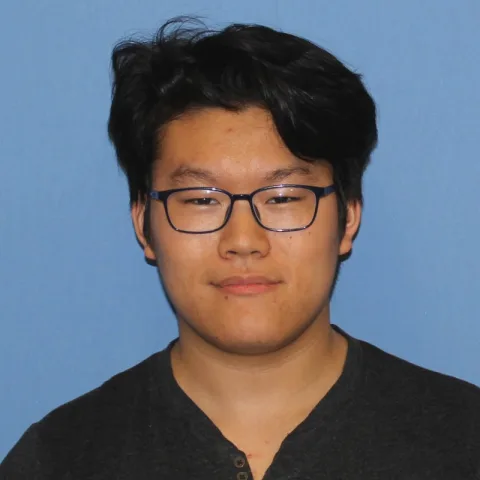
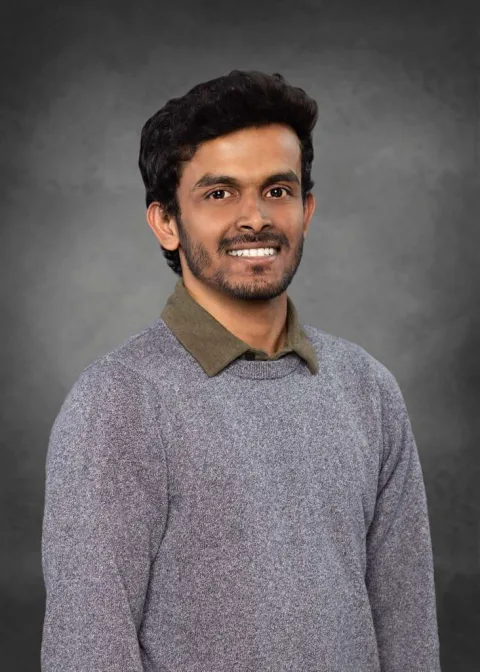
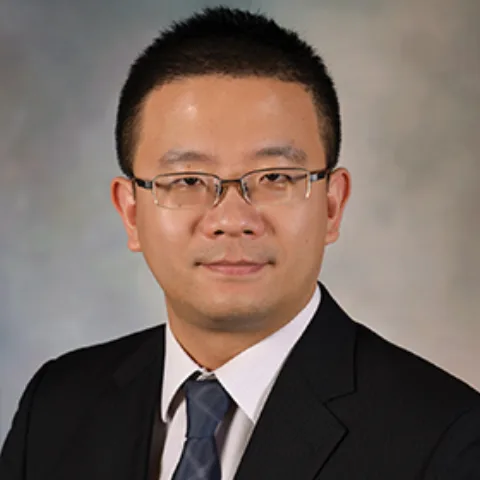
The team
PhD students and researchers working across computer science and medicine.




Work with us
We build AI that is used in real clinical and pharmaceutical settings, in close collaboration with hospitals and industry partners.
Prospective PhD and MS students
The best way to start is to contribute to PyHealth, our open-source toolkit: pick an issue, open a pull request, then email Prof. Sun with a link to your work.
Contribute to PyHealthMedical students, residents and fellows
We look for clinicians with coding skills (Python or R), basic machine learning knowledge, and at least two months of dedicated time for research in predictive modeling and generative AI. Email your CV and code samples.
Email Prof. SunIndustry and clinical partners
We collaborate with hospitals, pharma and health-tech companies on joint projects that lead to robust models, usable software and publications.
Get in touchAI for Health webinar series
Researchers and practitioners from academia and industry present recent work on AI in healthcare.